
Here’s something that a lot of people don’t know about: construction accounts for nearly 40% of carbon emissions globally. We’re not just talking about the actual building process, though that’s part of it. The figure encompasses everything from extracting digging materials from the earth, manufacturing concrete and steel, transporting materials to job sites, and, yes, even demolishing buildings when they’ve outlived their purpose.
For decades, construction has done its job of keeping roofs over our heads. Despite that, the industry’s environmental cost has been staggering, and we’re only now starting to grasp the full scope of it.
The good news is that the industry is experiencing a fundamental shift. What used to be a niche concept, green building has moved into the mainstream incredibly quickly. Regulations are tightening everywhere, climate pressure is mounting, and there is a growing recognition that our approach to resources has been completely unsustainable.
When talking about sustainable construction today, we’ve moved beyond adding a few eco-friendly touches to a conventional project. Many industry leaders are rethinking the entire process, from sourcing materials through to what happens decades from now when a building reaches the end of its life.
If you’re in the middle of planning a project, thinking about renovations, or simply trying to stay ahead of where the industry is headed, understanding these principles is absolutely essential. After all, you’re making decisions today that your kids and grandkids will have to live with. That might mean choosing bamboo over traditional lumber, working with natural stone specialists who source locally, or dozens of other choices that add up to something bigger.
Why We Can’t Keep Building the Old Way
The construction world has hit what you might call a make-or-break moment. Decades of building the way we’ve always built have created environmental problems that are getting harder to ignore. Once you understand just how big this impact really is, it becomes clear why sustainable building is a must.
What Traditional Construction Actually Costs the Planet
The reality is quite sobering when we understand what conventional construction actually involves.
The industry extracts enormous quantities of metals, stone, and timber. Manufacturing concrete and steel requires the use of energy on an almost unimaginable scale. The problem goes beyond just using up materials. Natural habitats are being destroyed, water resources are depleted, and pollutants are released into the atmosphere.
But that’s just the beginning. Once these materials are produced, they have to get to construction sites somehow. The logistics alone—trucks, ships, trains moving materials across continents—generate substantial carbon emissions before anyone even picks up a hammer. In the U.S., construction ranks among the top contributors to air pollution and water contamination, while also feeding our already overwhelming landfill crisis.
The Forces Pushing Change
What’s driving this transformation? Several factors are converging at once, and the combined pressure is reshaping everything about how we build.
- Climate Change: With meeting global climate targets becoming a critical agenda, construction’s massive carbon footprint means the industry can’t sit this one out.
- Resource Scarcity: Materials that have been construction staples for generations are becoming scarcer and more expensive by the year. This economic reality is pushing builders to get creative with resource management, ramp up recycling initiatives, and seriously consider alternatives that would have seemed too experimental just a few years ago.
- Regulatory Changes: Governments worldwide are implementing tougher building codes that mandate better energy efficiency, stricter waste management, and cleaner construction practices. What used to be voluntary guidelines are becoming legal requirements, sometimes with hefty penalties for non-compliance.
What People Want Now
It’s also worth noting how consumers’ expectations have gradually changed. People want buildings that align with their values while offering real advantages like healthier indoor air and lower energy bills. Such demand is creating meaningful market changes. Properties with sustainable features routinely sell for higher prices and move faster than conventional ones.
Industry analysts have taken notice of this trend. Market projections show consistent, strong growth in the green building sector for the foreseeable future. What we’re witnessing is a fundamental change in how people perceive buildings.
Breaking Down What Sustainable Construction Really Means
When people hear “sustainable construction,” they often think of a conventional building with a few eco-friendly upgrades. But that’s missing the bigger picture. Real sustainable construction means considering every aspect of a building’s existence, from where materials come from to what happens when the building eventually gets demolished.
The Core Philosophy
Sustainable construction aims to minimize environmental damage while maximizing how well a building actually works and supporting broader social and economic goals. It’s all about balancing three key areas: environmental responsibility, social impact, and economic viability.
Builders who embrace this approach design for adaptability and longevity. They choose materials that won’t exhaust natural resources, build in water and energy conservation from the outset, minimize waste throughout the process, and prioritize the health of people who will use these spaces. The underlying idea is pretty straightforward: use less, cause less damage, build things that last.
Making Sense of Green Certifications
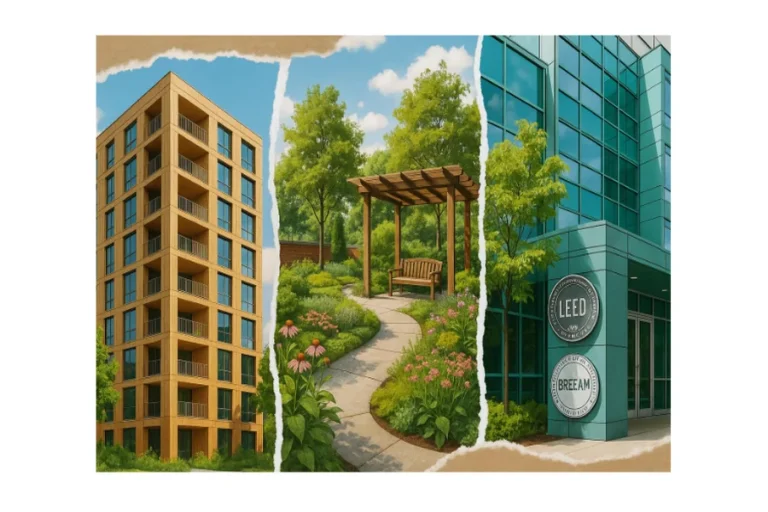
Certifications like LEED, BREEAM, and WELL serve as indicators that a building meets sustainable standards. These programs establish clear criteria and measurable benchmarks for environmental performance. They cover everything that affects a building’s ecological footprint, including site selection, water and energy use, material choices, and indoor air quality.
Beyond earning recognition, securing these certifications also means lower operating costs, higher property values, and access to various government incentives. When you choose certified materials like FSC wood, you’re contributing to projects that can achieve meaningful sustainability ratings.
The Real Benefits (And They’re More Than You Think)
Adopting sustainable construction practices delivers concrete benefits beyond environmental feel-good factors.
Environmental Wins
The environmental benefits are probably the most obvious. Green buildings use significantly less energy and water, resulting in reduced pollution and lower resource consumption. Studies consistently show that certified green buildings can slash both carbon emissions and water use compared to conventional structures.
Factor in recycled or renewable materials, smart waste management during construction, and planning for eventual material reuse, and the resource conservation benefits multiply. You’re keeping waste out of landfills and reducing the need to extract virgin materials.
The Economics Work Out
While sustainable buildings often cost more upfront, the financial returns usually justify the additional investment fairly quickly. Operational savings can be substantial—energy costs typically drop 30-50%, water expenses can fall 20-30%. These savings compound over time, creating a solid business case for the extra investment.
Certified green buildings also tend to command higher property values and better marketability. They can help you avoid future environmental penalties while potentially qualifying for government incentives or tax breaks.
People Benefits That Matter
The human impact is an equally important yet often overlooked benefit of sustainable construction. Better indoor air quality, improved natural lighting, and superior acoustic design create more comfortable, healthier spaces. These improvements mean fewer sick days, higher productivity, and better overall well-being for occupants.
These projects can strengthen communities too, through fair labor practices, local sourcing, and genuine community engagement. The approach creates jobs, promotes equity, and can improve neighborhoods in lasting ways.
The Challenges Are Real (But Not Insurmountable)
Moving toward sustainable construction practices involves some genuine obstacles that the industry is still working through.
Money Concerns
Worries about higher upfront costs aren’t unfounded. Specialized materials and technologies can increase initial expenses, creating real barriers for those with tight budgets or limited financing options. This remains true even when long-term savings are well-documented. Government incentives exist in many places, but navigating funding mechanisms for green projects can be complex and time-consuming.
Knowledge and Skills Gaps
The lack of specialized knowledge is perhaps the biggest challenge plaguing the industry. Sustainable construction requires expertise across multiple domains, including green materials, energy efficiency, waste management, and emerging technologies.
Although training programs are becoming more available, there is still a shortage of qualified professionals in all the necessary areas. The industry needs expanded education and awareness efforts to build a workforce ready for sustainable approaches.
How Innovation Is Solving These Problems
Emerging technologies and fresh approaches are steadily addressing these challenges, making sustainable construction more accessible and appealing.
Materials and Tech are Getting Better
Material options keep expanding in exciting directions. Builders now have access to growing varieties of renewable materials, such as certified wood, bamboo, and other innovative plant-based products. Crushed concrete, reclaimed steel, and other recycled materials are also becoming mainstream rather than specialty options.
Advanced materials, such as aerogel insulation and energy-efficient LED systems, are enhancing building performance in ways that were previously considered impossible. The focus has shifted toward materials with lower embodied energy, healthier compositions, and better potential for reuse.
Smart Systems are Game-Changers
Digital solutions are reshaping the way buildings are planned, constructed, and managed. Building Information Modeling (BIM) allows for more precise project planning, helping to reduce waste and avoid costly mistakes before they happen.
Meanwhile, smart building systems powered by IoT and AI can monitor and adjust water and energy use in real time, cutting down on unnecessary consumption. Some advanced systems even anticipate needs ahead of time, leading to ongoing savings that add up over the long run.
Circular Thinking is Taking Hold
Construction is increasingly embracing circular economy principles—thinking about material reuse and recycling from project conception. Design for deconstruction means planning buildings for easy disassembly and component reuse down the road.
Modular construction reduces on-site waste while making future reuse much more practical. When architects, contractors, and communities collaborate effectively, waste reduction strategies become far more powerful than any single party could achieve alone.
Your Roadmap to Getting Started
With careful planning, smart decisions, and a willingness to learn, you can significantly boost your project’s sustainability. Here’s how to begin.
Define Your Goals First
Set out by determining what you want to achieve. Do you want to cut energy use, reduce water consumption, minimize waste, or choose better materials? Clear goals guide every decision that follows.
Research which certifications make sense for your situation. Although LEED and BREEAM are well-established, other options may better suit your specific needs. Be on top of the regulations and standards that apply to your area, and aim to exceed minimum requirements whenever feasible.
Design Smart from the Start
Sustainability principles should be set into your design from the get-go, as this is where you’ll have maximum impact. Maximize natural light and ventilation and plan systems that help with energy and water conservation.
Consider prefabrication options that reduce waste, and implement efficient construction processes throughout your project. These approaches often save time and money while reducing environmental impact.
Choose Materials Thoughtfully
Prioritize locally-sourced, recycled, or rapidly renewable materials when possible. This reduces transportation emissions and resource depletion while often supporting local economies. Look for products with low embodied energy that are free from harmful chemicals.
Watch for certification marks like FSC on wood products—these indicate responsible sourcing. Recycled timber and concrete can deliver excellent performance and durability while significantly reducing environmental impact.
Work with the Right People
Most importantly, partner with specialists who have real experience with sustainable construction. Their expertise helps you spot opportunities you might miss, solve challenges more efficiently, and achieve your sustainability goals more effectively.
Since sustainable building practices evolve rapidly, work with professionals who stay current with new materials, technologies, and best practices. The investment in experienced guidance often pays for itself through better outcomes and fewer mistakes.

- 7 Lawn Care Hacks Every Homeowner Needs - June 8, 2026
- Can I Get The Best Dosa In Indiranagar Delivered To My Office By 9 AM? - June 5, 2026
- How to Choose the Best AI Anime Generator: Your Ultimate Guide - May 22, 2026