
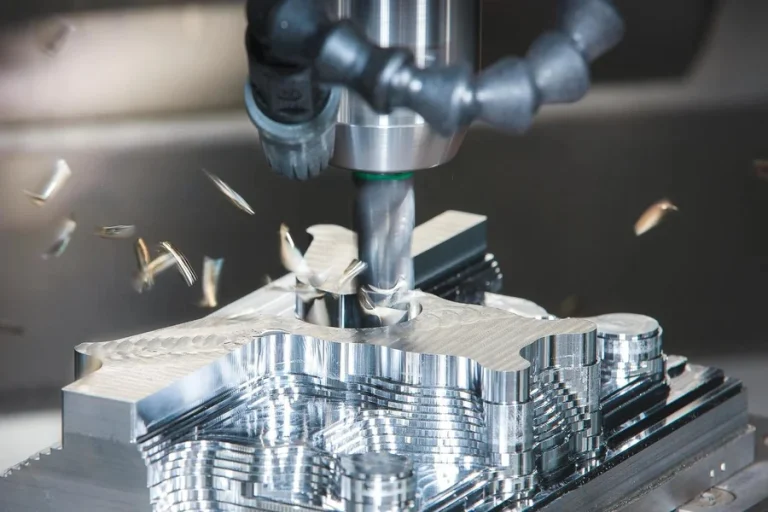
Sometimes, a single manufacturing process can’t do it all. If you’ve ever struggled to achieve the perfect balance between intricate shapes, high-strength materials and tight tolerances, you’ve seen this firsthand. For many engineers and product developers, combining CNC machining with 3D printing isn’t just a fallback – it’s often the smartest, most cost-effective path to producing complex components.
Click here to discover how blending additive and subtractive processes can help you build parts that are otherwise impossible or inefficient to make. Understanding when to combine these technologies can save you time, reduce errors and unlock design possibilities you might have thought were out of reach.
Why CNC Machining and 3D Printing Work So Well Together
3D printing (additive manufacturing) and CNC machining (subtractive manufacturing) are often seen as separate worlds. One builds layer by layer, the other removes material to achieve the final shape. But in practice, they complement each other:
- 3D printing excels at creating complex internal features, lightweight lattice structures and rapid prototypes without custom tooling.
- CNC machining delivers superior surface finishes, tight tolerances and strength in high-performance materials like titanium or hardened steels.
When combined, you get the best of both: freedom of design from 3D printing and the accuracy and durability of CNC machining.
When to Consider a Hybrid Approach
You don’t need hybrid manufacturing for every project. If your component is straightforward and can be machined efficiently from a single block of material, CNC machining alone might be all you need. But certain scenarios call for blending the two methods.
Complex Geometries That Can’t Be Milled Alone
Parts with deep internal channels, undercuts or lattice structures are difficult or impossible to mill without specialized tooling. Printing these features first and machining only the critical surfaces ensures both design complexity and dimensional accuracy.
Lightweighting and Material Efficiency
3D printing allows you to build hollow sections or intricate support structures, saving material weight and cost. CNC finishing then refines load-bearing faces or interfaces that require tight fits.
Low-Volume Production or Prototyping
For small runs or early-stage prototypes, printing the base shape and then using CNC machining for high-precision areas can avoid expensive tooling while delivering near-production quality.
Multi-Material or Functional Integration
Hybrid methods allow you to print complex cores or inserts (e.g., using composite materials) and then machine outer surfaces to precise dimensions, combining functionality that single-process manufacturing can’t achieve.
Practical Workflow: From 3D Printing to CNC Machining
A typical hybrid workflow might look like this:
- Design for Hybrid Manufacturing: Your CAD model is built with both processes in mind – areas requiring tight tolerances are identified for machining later.
- Additive Manufacturing: The base geometry or complex internal features are printed using materials suitable for secondary machining.
- CNC Machining: Printed parts are clamped and machined for critical dimensions, surface finishes and drilled features.
- Quality Verification: Inspection ensures the final part meets functional and aesthetic requirements.
This isn’t just theory – many industries use this approach for mission-critical parts, particularly where material properties and design complexity must coexist.
Key Industries Benefiting from Hybrid Manufacturing
Medical Devices
Surgical instruments orthopedic implants and dental prosthetics often need complex shapes to interface with human anatomy. 3D printing achieves these organic forms, while CNC machining ensures biocompatible metal surfaces meet regulatory tolerances.
Aerospace and Defense
Weight reduction and durability are paramount in aerospace components. Engineers print lightweight structures with internal channels for cooling or wiring, then machine outer mounting points for precision assembly.
Consumer Electronics
Rapid prototyping of housings and enclosures often combines plastic 3D prints with CNC-machined metal inserts or heatsinks, producing functional models that resemble final production units.
Automotive and Motorsport
Performance vehicles rely on hybrid parts for strength and speed – printed titanium brackets finished with CNC machining are common in prototypes and specialty builds.
Design Considerations for Combining Processes
To fully benefit from hybrid manufacturing, you need to design with both processes in mind from the start. Here’s what to consider:
- Material Compatibility: Ensure the printed material can withstand CNC machining without cracking or distorting. Metals like aluminum, titanium and stainless steel are common hybrid candidates.
- Support Structures: Plan printing orientations and supports to avoid obstructing machining access later.
- Fixturing and Alignment: Design features that help machinists accurately position printed parts in CNC setups for finishing.
- Tolerance Stack-Up: Understand how much material to leave on printed parts for machining to achieve final tolerances.
These considerations should be addressed early to avoid costly redesigns.
Advantages of Hybrid Manufacturing
Combining CNC and 3D printing offers several practical benefits beyond complexity alone:
- Cost Reduction: Less material waste compared to fully machined parts.
- Faster Development: Iterative prototypes can be printed and machined within days, not weeks.
- Improved Part Performance: Optimized geometries reduce weight while maintaining structural integrity.
- Customization: Enables production of patient-specific implants or unique aerospace components without expensive dedicated tooling.
Challenges and How to Overcome Them
Hybrid manufacturing isn’t without its hurdles. Surface porosity in printed parts can complicate machining and aligning printed and machined features demands skilled operators. Solutions include:
- Printing with machining allowances to compensate for irregularities
- Using advanced metrology (e.g., 3D scanning) to guide CNC setup
- Choosing high-quality additive processes like DMLS (Direct Metal Laser Sintering) that produce dense, machinable parts
Working with a partner experienced in both technologies is key to minimizing these risks and ensuring consistent results.
Future of Hybrid Manufacturing
The line between 3D printing and CNC machining is blurring. Hybrid machines that print and mill in a single setup are emerging, reducing handling and setup time. Advances in metal printing technologies and smarter CAM software will make combining processes even more efficient.
For engineers, this means fewer compromises: components can be lighter, stronger and more complex than ever before – without adding production headaches.
Combining CNC machining and 3D printing isn’t just a workaround for manufacturing challenges – it’s a powerful strategy for creating better parts faster. If your design demands complexity, precision and efficiency, understanding when and how to merge these technologies can be the difference between a prototype that fails and a product that leads the market.
